Poverty in Africa
facts & stats About Poverty in Africa
At a glance: Africa poverty facts
(Please note that the African continent comprises some 54+ countries, each with their own economic, social and political dynamics.)
- Half of the African population lacks access to essential medicines.* World Health Organization
- Although it only accounts for 16% of the total world population, sub-Saharan Africa comprises 67% of the global number of people living in extreme poverty.* The World Bank
- Roughly 53% of the population of sub-Saharan Africa lacks access to electricity and 40% lack access to clean drinking water.* United Nations
- In Zambia, more than 70% of children suffer deprivations in two or more vital areas of well-being, including water and sanitation, health, education and nutrition. The problem is even worse in rural areas.* UNICEF
- In some African nations, one in three children are malnourished. Although Somalia has the highest rates, Zambia is one of only five other African countries with rates exceeding 30% of children being undernourished.* IFRC
Causes & Effects of Poverty in Africa
Global poverty has been dramatically reduced over the past few decades, spawned by strong economic growth in developing nations, especially in Asia. According to The World Bank, between 1990 and 2025, the number of people worldwide living in extreme poverty decreased from roughly 2.3 billion to about 830 million*.
Poverty reduction on the African continent, however, has remained stubbornly static: In 1990, sub-Saharan Africa accounted for 14% of the world’s poor; by 2024, 67% of those living in extreme poverty lived in sub-Saharan Africa*.
The causes of poverty in Africa—a continent with vast natural resources—are complex. No single cause, of course, exists uniformly across this huge continent. The covid pandemic, rapid population growth, conflicts affecting the food chain and climate change are among the main factors contributing to the prevalence of poverty in Africa.
These and other shocks exacerbated already-rising debt burdens in developing countries, with interest payments in the world’s poorest countries reaching an all-time high in 2023*. Paying such high-debt interest diverts government spending away from critical needs like healthcare, education, food security, and basic infrastructure. The inequitable financial structures and other disparities in the global economy add an additional burden to nations struggling to meet sustainable development goals.
Just as domestic income inequality can destabilize countries, economic inequities on the international stage make it much more difficult for Africa’s developing nations to deliver critical public services to their citizens.
For the underprivileged, poverty in Africa hits daily life hard. Families face malnutrition, preventable illness, and lack of opportunity, with health clinics and even schools being out of reach for many, especially in rural areas. When access to health care and educational opportunities are closed off, disadvantaged children can miss important milestones critical to changing their futures.
Throughout much of Africa, available jobs are mostly low‑paying and informal, and credit and infrastructure are scarce. Climate shocks or conflicts easily erase fragile gains in economic development. The result is trapped potential, widening inequality, and slower individual and national progress.
On average, developing countries pay three times more for borrowing than do developed nations*:
- The United States pays a roughly 3.3% interest rate on loans*
- The rate in Latin America and the Caribbean is 7.7%*
- Nations in Africa pay around 11.6%*.
Africa is the least developed continent
on earth.
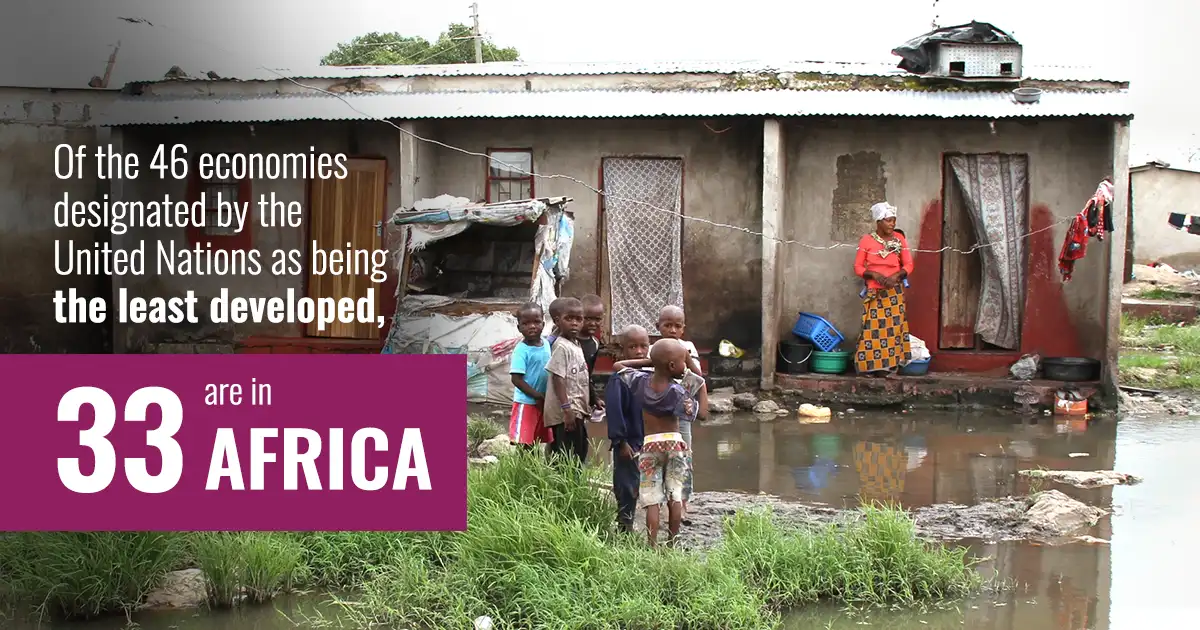
Of the 46 economies designated by the United Nations as being the least developed, 33 are in Africa.* As a Children International supporter, you play a role in solving these systemic issues. Our program, with a focus on human development, serves at-risk children and families in the sub-Saharan African nation of Zambia.
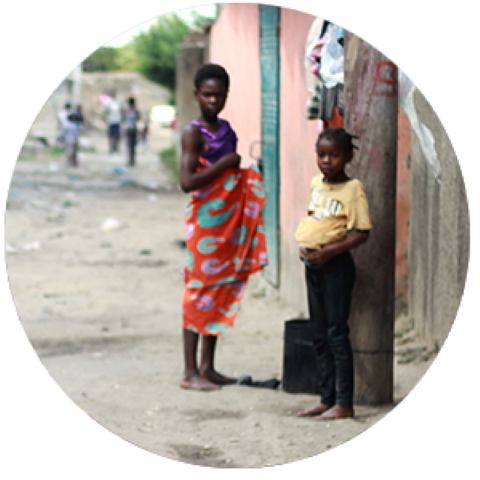

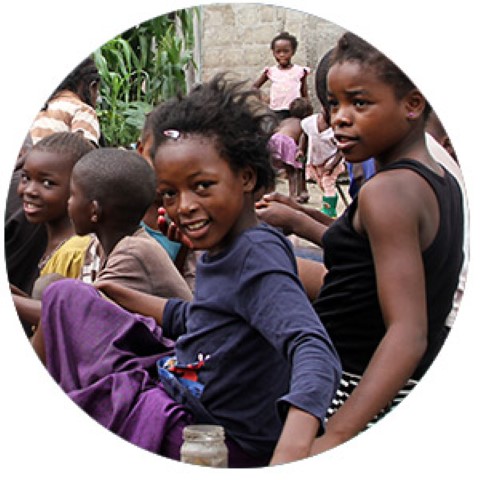
Africa: a continent of children
- Roughly 41% of sub-Saharan Africa’s population are children under 15 years old*.
- Nearly 12 million African children under the age of five suffer from wasting*. (Wasting is a form of malnutrition that refers to a child who is too thin for their height. This dangerous condition can prevent children from developing their full physical and cognitive potential.)
- Approximately 1 in 5 African children do not receive basic vaccines, resulting in more than 30 million children under five suffering from vaccine-preventable diseases every year in Africa.
About half a million children die from those illnesses annually. This means Africa accounts for nearly 60% of global vaccine-preventable deaths*. - The continent’s population is expected to reach nearly 2.5 billion by 2050, resulting in more than 25% of the global population being African.
Difficult conditions
Around 600 million Africans lack reliable access to electricity. This represents almost half the continent’s population—and accounts for 80% of the world’s total*.
There are more people on the African continent who lack basic access to safe drinking water than the entire U.S. population: Roughly 390 million*.
Nearly 200 million people in Africa live without basic sanitation services, forcing them to practice open defecation*.
Globally, it is estimated that about 8% of the world’s population faced hunger in the past year (2024). In Africa, that number is more than doubled, at roughly 20%*.
A difficult but solvable
issue
While the poverty rate in Africa has declined in recent decades, the total number of poor people has actually increased due to rapid population growth across the continent. However, progress is possible, especially since projections of rising educational attainment are coinciding with a booming demographic shift toward youth. By ensuring access to health and education—and by helping to strengthen existing services in Zambia—the programs, resources and opportunities provided through our child and youth development program help struggling families and communities to build better lives for themselves.
Poverty reduction in Africa requires ongoing, coordinated efforts by numerous organizations, institutions, governments and individuals, working together toward feasible solutions. At Children International, we partner with all these sectors—locally, nationally and internationally—to ease the burdens our children and their families face.
Together with our supporters, we provide local programs that deliver access to medicines, health and dental care, education and skills training and youth development. And it is working:
We strengthen families’ resilience, improve school attendance and health outcomes, and create real pathways out of poverty through consistent community investment and targeted opportunities and services.